VETiNSTANT
About Author
You choose to give it your all to keep the animals. smiling. We are giving it our all to help you take care of more pets, run your clinic, harness tech for instant, vital data - thereby reassuring pets and parents.


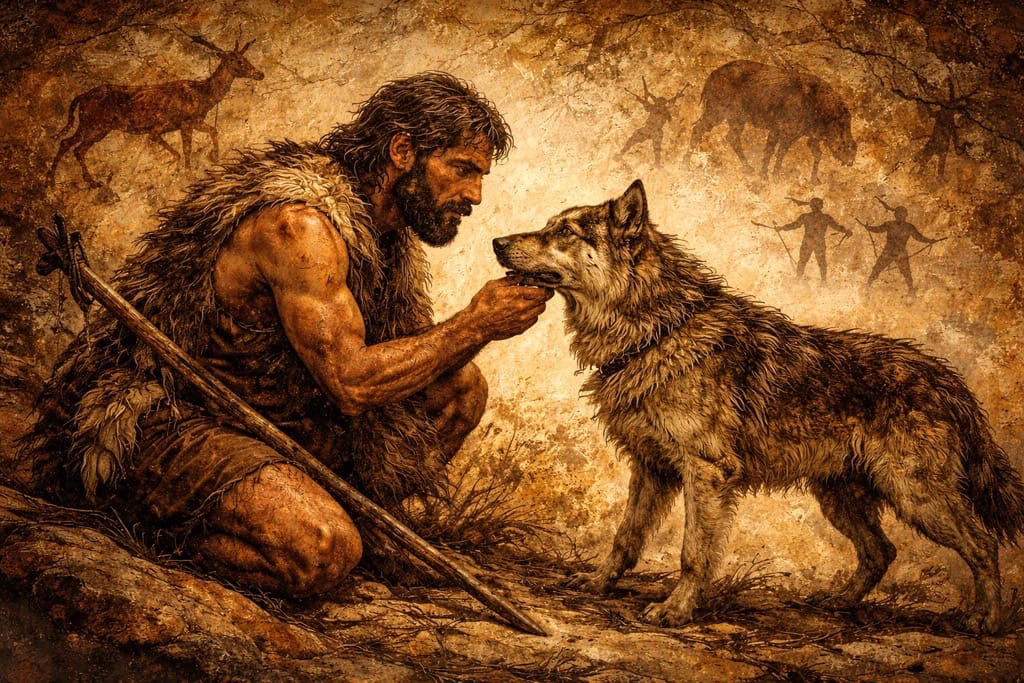
A nearly 14,000-year-old Palaeolithic tomb in Germany uncovered a human buried with a dog or a puppy, which shows the long-standing relationship between humans and pets. It’s hard to imagine our lives today without our pets; however, this was the norm somewhere between 33,000 to 11,000 years ago. This growing interdependency has always been in flux, and this shift from animals fulfilling labour requirements to companionship requirements is readily apparent as families begin to prefer more docile pets.
Dogs were the first animals to be domesticated—twice, actually. First in Europe and then in Asia, some 2,000 years apart, and from two separate wolf lineages. Some less fearful wolves may have been drawn to nomadic settlements to scavenge kills but would have ultimately found utility as barking sentinels warning of human or animal invaders at night. Once this interaction put the wheel in motion, humans may have selected pups who would then be socialized to humans and unconsciously and unintentionally selected for decreased flight behaviour and increased sociality, two trademarks of tameness. On behalf of our ancestors, I apologize if this flight behaviour is still not readily apparent in your dogs every time they dart out of the house when the door is opened.
As humans transitioned to agricultural economies, so too did the utility of dogs. They began to perform functions such as herding livestock and property guarding. As we became more established societies with a focus on expansion, dogs played roles in wars, as status symbols, and even as messengers. When we became explorers, dogs were increasingly used in state and military functions as colonial exploration companions and search dogs for lost travellers. With a shift towards holistic healthcare in the late 20th and early 21st centuries, dogs took on guiding roles for people with blindness and also offered therapy, psychiatric, and emotional support.
The utility of cats, even as mouse-catchers, had never outweighed the risks associated with attempting to domesticate wild cats. They weren’t particularly social creatures and were always more attached to places than people. Therefore, there is little reason to believe early agricultural economies actively sought them out. Instead, cats began cohabiting human spaces for easy access to food and shelter and were merely ‘tolerated’ by humans while gradually diverging from their wilder ancestors. Not surprisingly, they were first domesticated in Egypt; however, the Egyptians only managed to tame them after having already tamed lions, monkeys, and hyenas. Remember that fact the next time you think your cat never listens to you.
Once domesticated, cats primarily served practical roles as rodent controllers, both in homes and on ships, protecting valuable food stores and trade goods. Unlike dogs, cats rarely performed cooperative labour or formal duties, but their presence was vital for human economic survival. Over time, cats became symbols of luck, protection, and mysticism in different cultures while continuing their functional role as guardians against pests. In modern times, while they may not serve in the military or as service animals like dogs, cats thrive as companions, therapy animals, and even as cultural icons, demonstrating that their “work” has evolved into more emotional and symbolic contributions.
In essence, both dogs and cats have walked parallel yet very different paths alongside humans. Dogs became cooperative workers, warriors, and helpers, while cats carved out a quieter niche of pest control, companionship, and mystique. Together, they illustrate the dynamic ways humans and animals have shaped each other’s lives, from survival and labour to love and emotional support.
References:
https://www.bbc.co.uk/bitesize/articles/zd7g8p3
https://education.nationalgeographic.org/resource/domestication/
https://www.ncbi.nlm.nih.gov/books/NBK219727/

About Author
You choose to give it your all to keep the animals. smiling. We are giving it our all to help you take care of more pets, run your clinic, harness tech for instant, vital data - thereby reassuring pets and parents.